
Intentional Content is one of the core pillars of Flipped Learning 3.0, but it is often misunderstood. This article explores how educators can deliberately design content, activities, and media based on competencies, Backward Design, and Bloom’s Taxonomy, while highlighting common misconceptions and practical recommendations for creating meaningful, learner-centred learning experiences.
Intentional Content in Flipped Learning 3.0 refers to the deliberate and competency-based design process through which educators decide which content, learning activities, and media formats provide the highest value for learning.
What’s the idea and which traps can be found?
Rather than simply transferring information, teachers intentionally design learning experiences that support the desired learning outcomes.
Starting from the intended competencies and following the principles of Backward Design, educators plan content and learning activities according to Bloom’s Taxonomy. Learning processes related to remembering and understanding are often well suited to the Individual Learning Space, while higher-order cognitive processes such as applying, analysing, evaluating, and creating benefit from interaction, feedback, and collaboration in the Group Learning Space.
Intentional Content is not limited to deciding where learning takes place. It also involves the careful selection of appropriate formats and media, including texts, videos, podcasts, simulations, interactive activities, and AI-supported learning resources, to support different learning needs and pathways.
Another common misunderstanding is to assume that all learners should receive the same content in the same format. Effective Intentional Content recognises that different learners may benefit from different resources and modes of engagement.
The ultimate goal of Intentional Content is to use valuable group learning time for meaningful, active, and collaborative learning experiences that promote higher-order thinking and support a learner-centred, competency-based learning culture.
Summative Considerations and Recommendations
Successful implementation of Intentional Content requires educators to think beyond technology and focus on purposeful instructional design. Four common errors can be avoided through conscious pedagogical decisions.
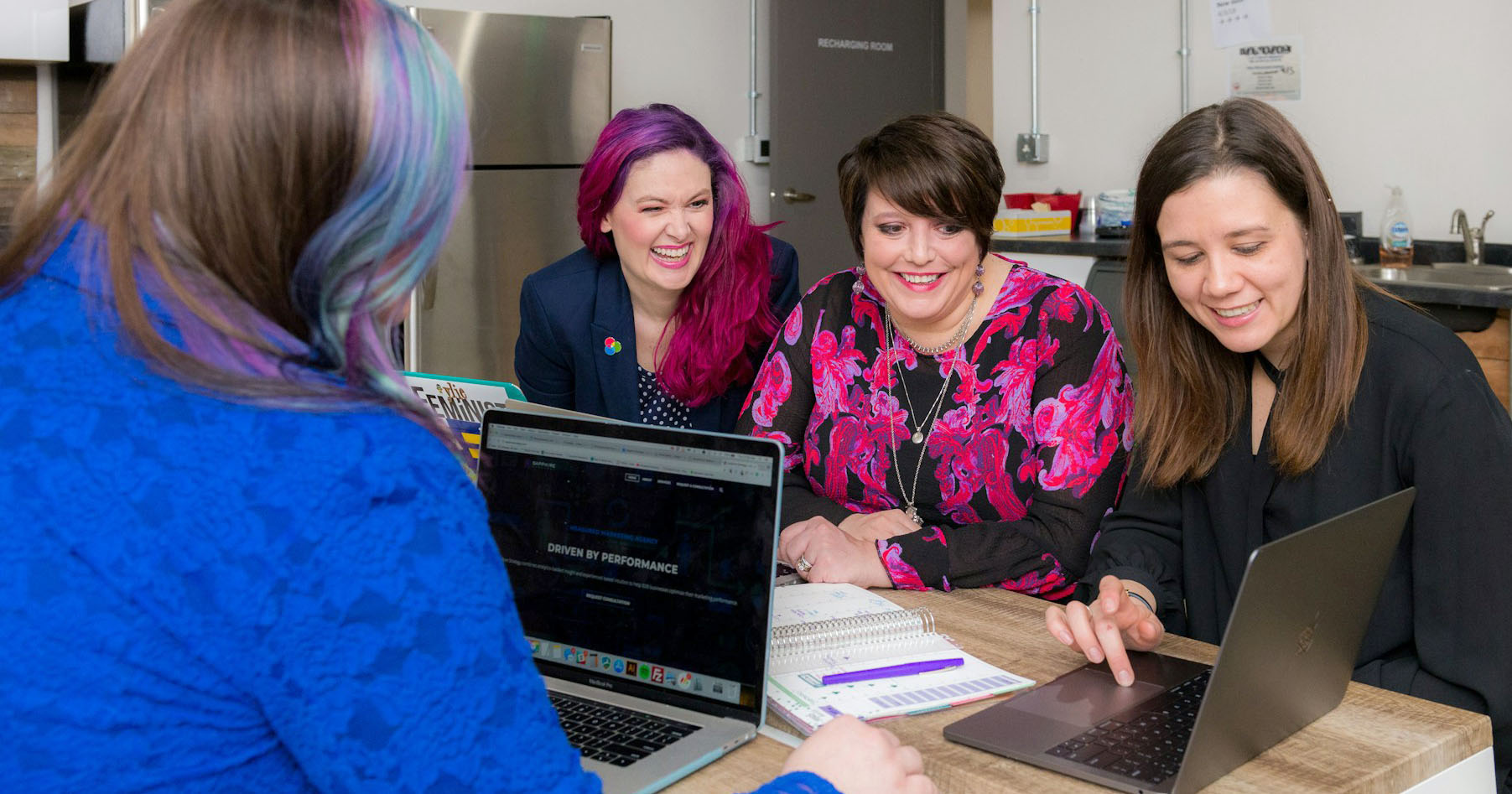
Learners in the Group Learning Space, working together on an active learning item.
First, educators should avoid equating Intentional Content with video production. Instead of asking “Which videos should I create?”, they should ask “Which learning experiences best support the intended competencies?” and select the most appropriate media accordingly.
Second, decisions about what happens in the Individual Learning Space and the Group Learning Space should not be based on convenience or time constraints. Rather, educators should use Bloom’s Taxonomy as a guide, assigning lower-order cognitive processes such as remembering and understanding to individual learning and reserving group learning time for higher-order processes such as applying, analysing, evaluating, and creating.
Third, educators should recognise that learners differ in their needs, backgrounds, and preferences. Providing multiple formats, alternative pathways, and opportunities for self-paced learning helps ensure accessibility, inclusion, and meaningful engagement for diverse learners.
Finally, Intentional Content should not be viewed as a technological challenge but as a pedagogical design process. Technology and media are tools that serve learning goals, not the starting point of instructional planning. Beginning with competencies, learning outcomes, and desired evidence of learning through Backward Design helps ensure that content, activities, and assessment are aligned.
In summary, effective Intentional Content is achieved when educators design learning intentionally, align content with cognitive processes, provide flexible learning opportunities, and prioritise pedagogy over technology. These principles enable Flipped Learning 3.0 to create meaningful, learner-centred, and competency-based learning experiences.