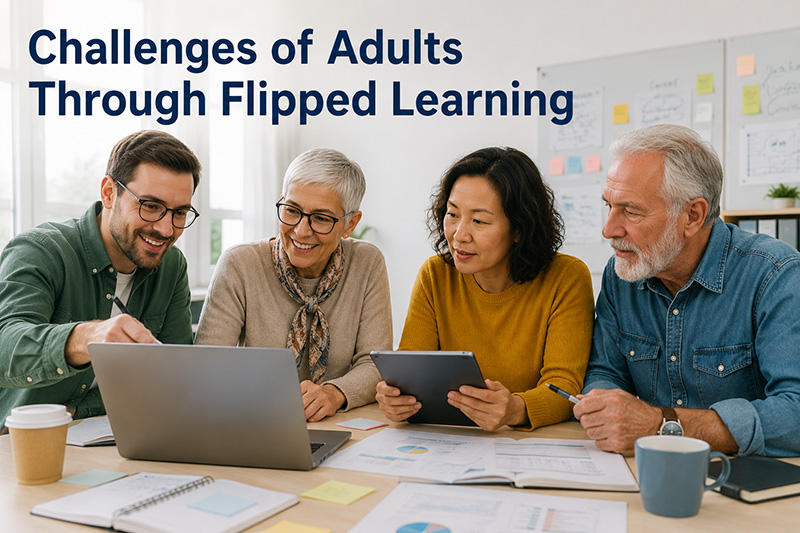
Challenges Adult Learners May Encounter in Flipped Learning 3.0 Courses

Flipped Learning 3.0 (FL3.0) changes not only where learning takes place, but also how learners participate in the learning process. Adult learners prepare individually, enter group learning with prior knowledge and questions, apply what they have learned, collaborate with others and reflect on their progress. For some adults, this way of learning may initially be Read More …
Intentional Content in Flipped Learning 3.0

Intentional Content is one of the core pillars of Flipped Learning 3.0, but it is often misunderstood. This article explores how educators can deliberately design content, activities, and media based on competencies, Backward Design, and Bloom’s Taxonomy, while highlighting common misconceptions and practical recommendations for creating meaningful, learner-centred learning experiences. Intentional Content in Flipped Learning Read More …

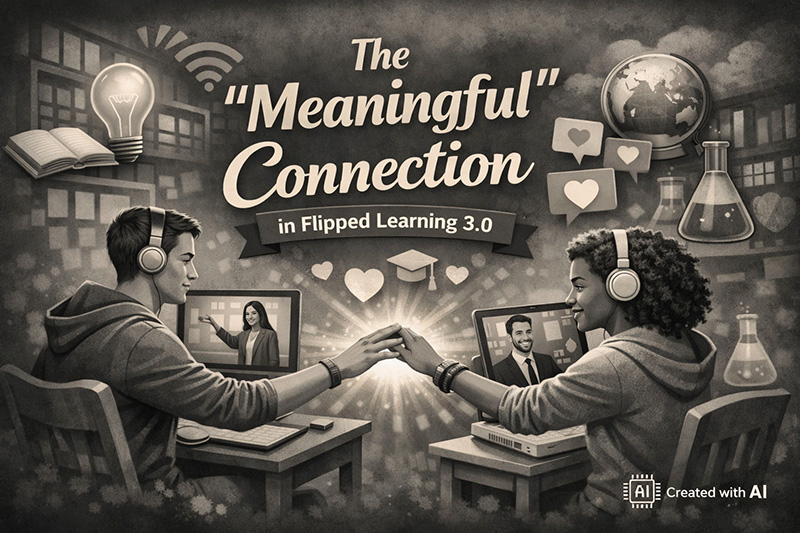
The “Meaningful” Connection in Flipped Learning 3.0

A critical reflection on meaningful activities between ILS and GLS A meaningful connection between the Individual Learning Space (ILS) and the Group Learning Space (GLS) is often assumed but rarely examined with sufficient clarity. This reflection highlights why “meaningful activities” are frequently misunderstood and how this weakens the intended learning progression in Flipped Learning 3.0. 1 Read More …

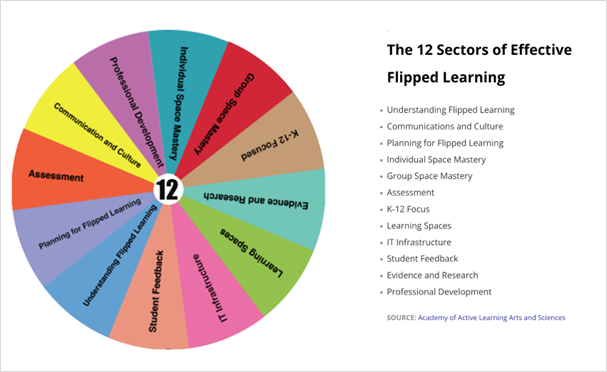
Twelve Sektors

The Twelve Sectors of Flipped Learning 3.0 are a comprehensive framework that can help educators implement flipped learning in their classrooms. By understanding and applying the principles of these twelve sectors, educators can create a successful flipped learning environment that benefits all learners. The Flipped Learning 3.0 framework model encompasses these twelve essential sectors to Read More …

Flipped Learning 3.0 – explained easily

We have created an infographic that explains Flipped Learning 3.0 in a glimpse. Flipped-Learning_3.0-Infographics by Peter Mazohl This graphic has been developed in the frame of the InterMedia Project. This ERASMUS+ project cares for the development of multimedia-based content for learning and training. CANVA was one of the analyzed tools that have been selected by Read More …

Digital & Analogue

Flipped Learning 3.0 uses a technical approach – undoubtedly! Nevertheless, it makes sense not to focus on technology only. Technology-enhanced learning or training is a modern way of teaching, much appreciated by the learners nowadays. Nevertheless, technology is not the last word of wisdom. Analogue methods, like handwriting or creating some scribbles with paper and Read More …

IT Infrastructure in Flipped Learning

IT plays an extremely important role in Flipped Learning 3.0: Content and activities are using Multimedia; active learning is also deeply connected with the use of technology, and especially the individual space makes intensive use of ICT. Consequently, it can be deduced that digitization occupies an important place in Flipped Learning and therefore different areas, Read More …